Alameda Central and Madero Street: A Walking Tour from Bellas Artes to the Zócalo
A two-to-three-hour walk that starts at the door of Hotel Bellas Artes: the Alameda Central, the Palacio Postal, the Casa de los Azulejos, the Torre Latinoamericana and pedestrian Madero Street all the way to the Zócalo.
Hotel Bellas Artes
A walk through the heart of downtown
Few city walks pack so much history into so little distance. In under two kilometers, this route links the oldest public park in the Americas, a post office that looks like a theater, a colonial mansion covered in tiles, the city's first great skyscraper and the busiest pedestrian street in Mexico, ending at the Zócalo.
The starting point is the door of Hotel Bellas Artes (Av. 5 de Mayo 10). From here, the Palacio de Bellas Artes is 1 minute away on foot, the Alameda Central 2 minutes, the Torre Latinoamericana 3 minutes, the Palacio Postal 4 minutes and the Zócalo 5 minutes. If you'd like to do this walk without relying on taxis, you can book directly and set off from the lobby.
Duration: 2 to 3 hours with stops. Distance: about 2 km. Best time: morning, or mid-afternoon to finish at the Zócalo at sunset.
Stop 1: Palacio de Bellas Artes
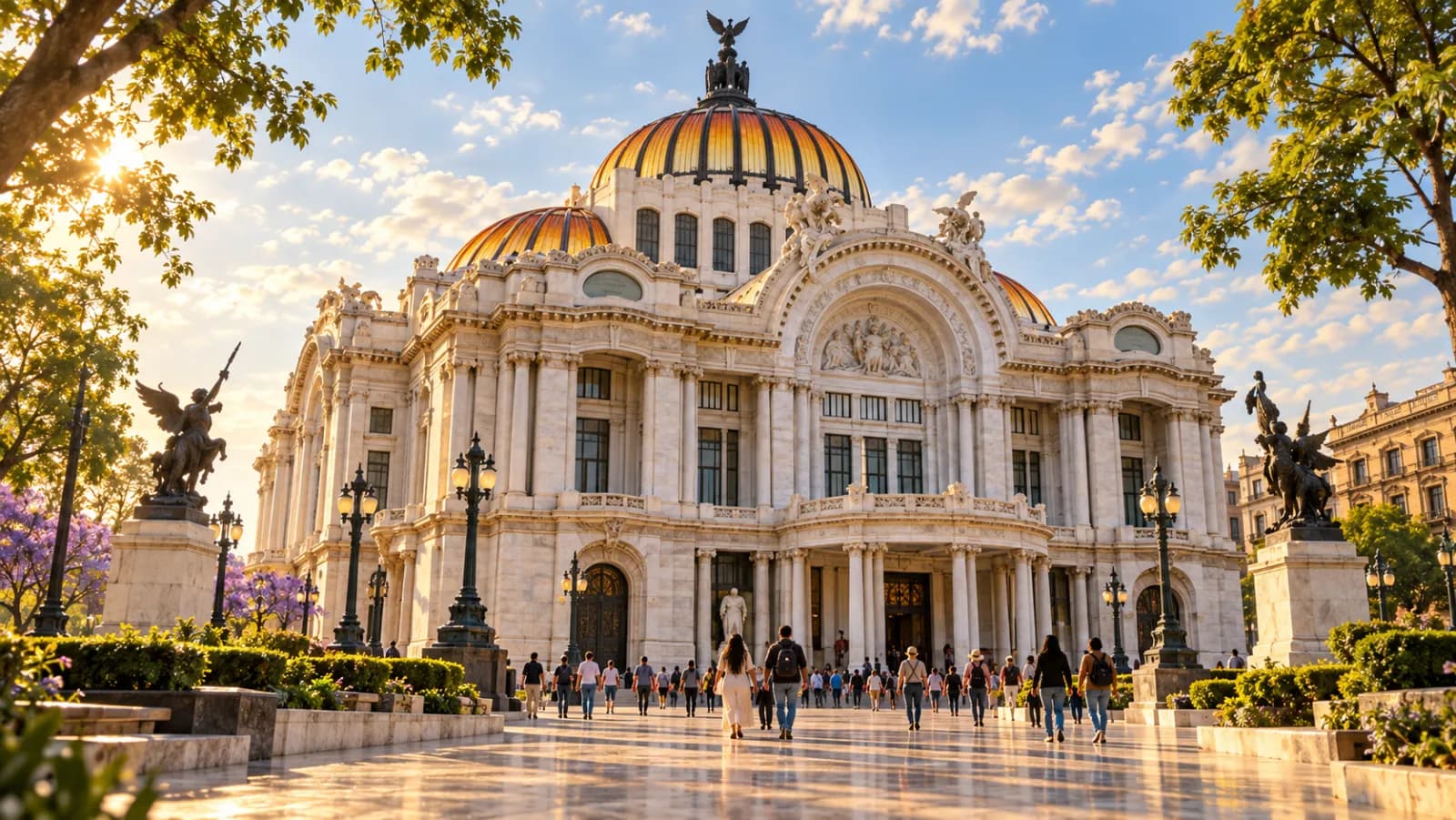
Start in front of the Palacio de Bellas Artes, with its white marble façade and golden dome. If you have time, go in to see the murals by Rivera, Orozco, Siqueiros and Tamayo; if not, save it for another day and spend a few minutes on the exterior. Everything you need is in our guide to the Palacio de Bellas Artes: how to get there and what to see.
Stop 2: Alameda Central
Cross to the west and enter the Alameda Central, created in the late 16th century and considered the oldest public park in the Americas. Its paths lined with fountains, sculptures and trees are the perfect place to watch the city go about its day.
Don't miss:
- Hemiciclo a Juárez: the white marble monument to Benito Juárez facing Avenida Juárez, inaugurated in 1910.
- The fountains and sculptures scattered through the park, many from the early 20th century.
- Museo Mural Diego Rivera: at the park's western end, it displays the famous mural Sueño de una tarde dominical en la Alameda Central (Dream of a Sunday Afternoon in the Alameda Central), in which Rivera painted figures from Mexican history strolling through this very park, including La Catrina.
Allow 30 to 45 minutes for the park, then head back toward the Palacio.
Stop 3: Palacio Postal
Across Eje Central, on the corner with Tacuba, stands the Palacio Postal (Mexico's Postal Palace). It was designed by the same architect as the Palacio de Bellas Artes, Adamo Boari, and opened in 1907. It still works as a post office, so you can walk in during opening hours: the bronze staircases, railings and gilded details of the lobby surprise almost every visitor.
One block away on Calle de Tacuba, Plaza Manuel Tolsá brings together the Museo Nacional de Arte (MUNAL) and the equestrian statue of Charles IV known as "El Caballito." If you're interested in Mexican art, save MUNAL for another time; it features in our guide to the best museums in Mexico City.
Stop 4: Casa de los Azulejos
Walk south along Eje Central to the corner with Madero. There you'll find the Casa de los Azulejos (House of Tiles), an 18th-century palace whose façade is entirely covered in blue-and-white Puebla talavera tiles. It's one of downtown's most photographed façades.
Today it houses a Sanborns restaurant and store, so you can step in to see the covered courtyard and climb the staircase that holds José Clemente Orozco's mural Omnisciencia. It's also a good stop for coffee or breakfast; you'll find more options in our guide to where to eat near Bellas Artes.
Stop 5: Torre Latinoamericana
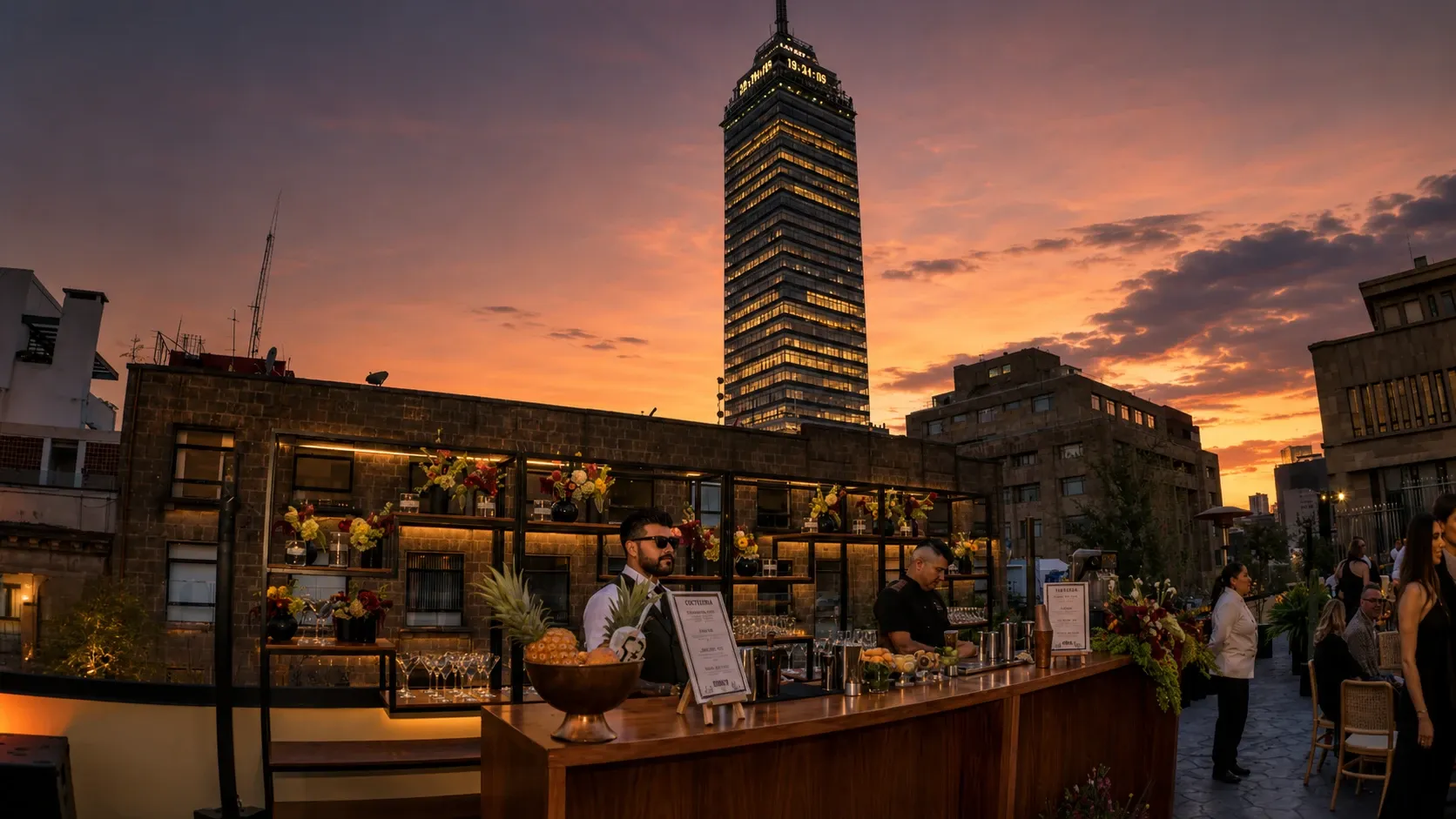
Right across rises the Torre Latinoamericana, inaugurated in 1956. For years it was one of the tallest buildings in Latin America, and it became famous for withstanding the major earthquakes of 1957 and 1985. At the top there's an observation deck with 360-degree views: on clear days you can make out the volcanoes and clearly see the Bellas Artes dome and the Alameda.
Tip: go up at sunset to watch the city lights come on. Check hours and tickets on the observation deck's official website.
Stop 6: Madero Street to the Zócalo
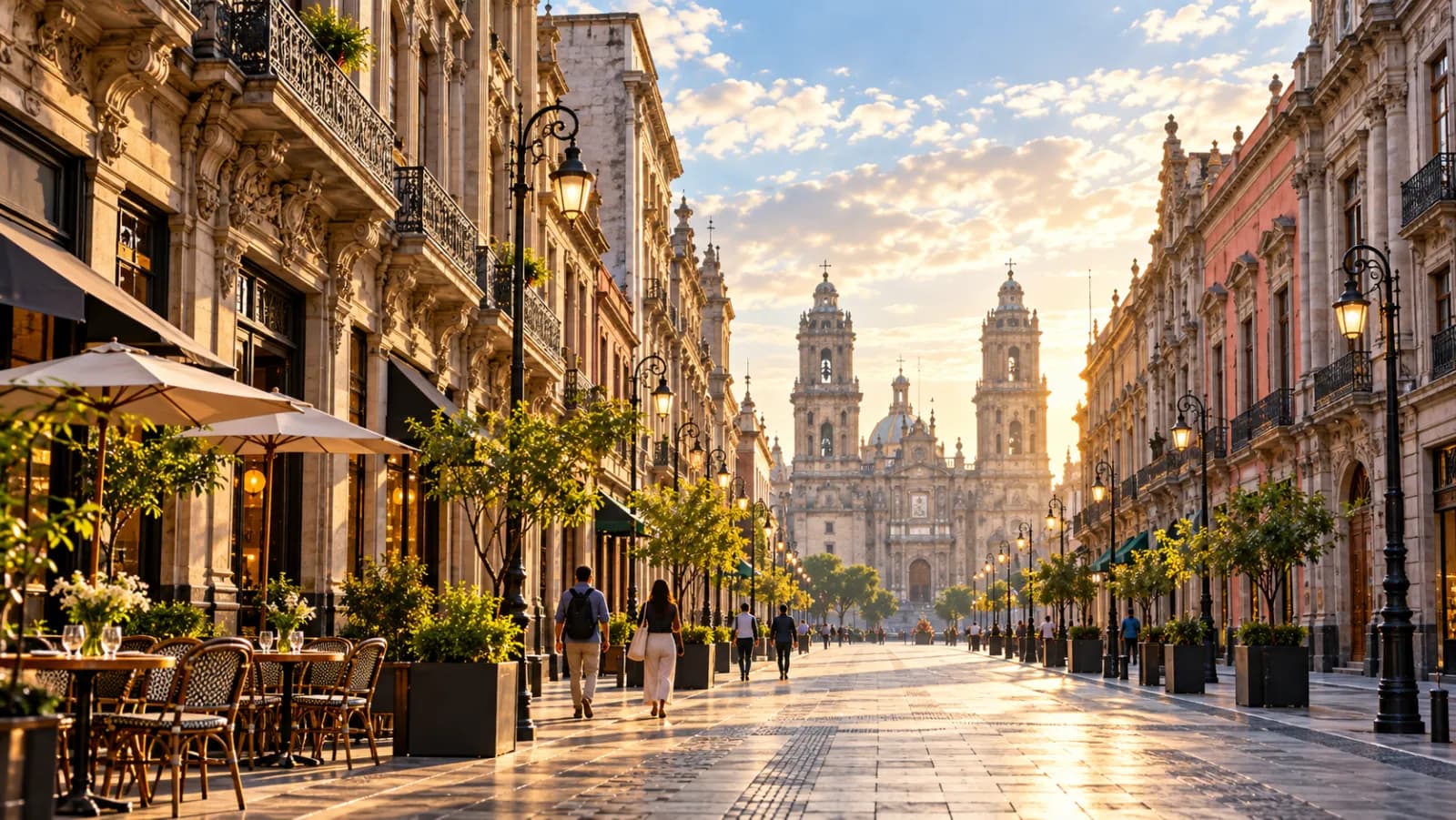
From the Tower, Calle Francisco I. Madero runs east to the Zócalo. It has been pedestrian-only since 2010 and tens of thousands of people walk it every day: street musicians, shops, cafés and façades from several centuries.
Along the way, look out for:
- Templo de San Francisco: beside the Tower, remains of the great 16th-century Franciscan convent, with a baroque façade set below street level.
- Palacio de Iturbide: an 18th-century baroque residence where Agustín de Iturbide lived; today it's a cultural space with temporary exhibitions.
- Templo de La Profesa: a baroque church on the corner with Isabel la Católica.
- Jewelry shops and early-20th-century buildings on the upper floors: it pays to look up.
Finish: the Zócalo
Madero opens onto the Plaza de la Constitución, the Zócalo, one of the largest squares in the world. Ahead is the Catedral Metropolitana; to the left, the Palacio Nacional; and to one side, the archaeological site of the Templo Mayor. If you still have energy, continue with our guide to things to do in the Historic Center.
To head back, take Avenida 5 de Mayo, parallel to Madero: in about 5 minutes you'll be back at the hotel, passing the Banco de México building on the way.
Tips for the walk
- Comfortable shoes: downtown sidewalks are uneven and you'll walk more than you expect.
- Water and sun: at midday the sun is strong at more than 2,200 meters above sea level; bring water and a hat.
- Rain: in the rainy season (roughly June to September) it often rains in the afternoon; do the walk in the morning.
- Belongings: Madero is very busy; wear your backpack in front and keep your phone close.
- Mondays: many museums close; the outdoor walk works any day.
- Midday break: since you're only minutes from the hotel, you can go back to rest and pick up again in the afternoon.
Your base for walking downtown
Staying on Avenida 5 de Mayo puts this whole route within reach without transport. See why it's the best place to stay in the Historic Center and, if you have two days, combine this walk with our 48-hour itinerary.
Frequently asked questions
How long is the walk from the Alameda along Madero Street to the Zócalo?
Walking without stops it takes about 30 minutes. With visits to the Alameda, the Palacio Postal, the Casa de los Azulejos and the Torre Latinoamericana observation deck, allow 2 to 3 hours.
Is Madero Street pedestrian-only?
Yes. Calle Francisco I. Madero has been pedestrian-only between Eje Central and the Zócalo since 2010.
Can you go inside the Palacio Postal?
Yes. It's still a working post office, and you can visit the lobby during its opening hours.
How far is the Alameda Central from Hotel Bellas Artes?
The Alameda Central is about a 2-minute walk from the hotel, on the far side of the Palacio de Bellas Artes.